



JOINT PRESS RELEASE
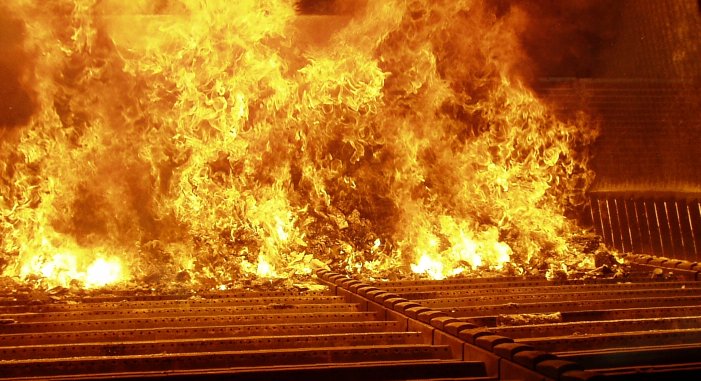
Prompted by the recent public consultation by the Ministry of Environment and Energy regarding the Strategic Environmental Impact Assessment (SEIA) of six incineration plants in Greece, the undersigned environmental organizations present their position and substantiate that Greece can achieve the national goal of reducing landfill disposal to 10% of Municipal Solid Waste (MSW) by 2035 without incineration—and at a much lower cost. They also submit realistic proposals for meeting all EU Circular Economy targets.
Incineration: A Persistent Pursuit in Greece
Incineration has been promoted and rejected twice in Greece (in 1995 and 2010) as it was deemed costly, dangerous, and socially restrictive. Today, it returns with an added disadvantage: it is unnecessary. Incineration has always been part of Greece’s plans for waste management. To justify its necessity today, the country—through the National Waste Management Plan (NWMP) 2020–2030 and Law 4819/2021—has set a national goal to reduce landfill disposal to a maximum of 10% of MSW by 2030, even though the relevant EU Directive allows achievement by 2035, with a possible extension to 2040. Meanwhile, Waste Treatment and Recovery Units are being designed to produce more fuel rather than recyclable or compostable material.
Why Say No to Incineration?
The undersigned environmental organizations analyzed all available data and demonstrate (see full analysis HERE https://ecorec.gr/wp-content/uploads/2025/09/%CE%94%CE%B9%CE%B1%CE%B2%CE%BF%CF%8D%CE%BB%CE%B5%CF%85%CF%83%CE%B7_%CE%98%CE%95%CE%A3%CE%95%CE%99%CE%A3-%CE%9F%CE%95%CE%91-GREENPEACE_%CE%A3%CE%9C%CE%A0%CE%95_Final_05092025.pdf
) that:
- The EU landfill target of <10% can be achieved without incineration by 2035.
- A policy focused on Prevention, Preparation for Reuse, and Source Separation creates significantly more jobs and saves much more energy than incineration.
- Even the most modern incineration plants emit hazardous air pollutants—albeit fewer than in the past—and generate hazardous solid waste that cannot currently be disposed of in Greece.
- With conservative estimates and excluding VAT, the total annual cost for six incineration plants by 2035 is projected at €223–363 million (or €189–308 per ton). If this burden falls entirely on municipalities, average municipal fees would need to increase by 17–28%.
If Not Incineration, Then What?
The environmental organizations propose the obvious, based on EU Directives and the experience of modern societies: to achieve the EU targets of 65% Source Separation and <10% landfill by 2035, Greece must embrace:
- Prevention
- Preparation for Reuse
- Source Separation with valorization through recycling, composting, and anaerobic digestion—WITHOUT THERMAL PROCESSES
To meet these goals, the State, Local Authorities, and Society must unite. The following minimum targeted actions are proposed:
- Optimize the operation of existing and future Waste Treatment and Recovery Units using Best Available Technologies to recover cleaner and higher-quality recyclable/compostable materials.
- Accelerate nationwide development of key infrastructure such as composting units, Green Points, Creative Reuse Centers, and Integrated Green Points.
- Address long-standing weaknesses and stagnation in recycling and redesign the recycling/alternative management system in Greece.
- Immediately launch the Collective Alternative Management System for deposit-return of plastic bottles and aluminum cans, and for agricultural plastics.
- Finalize legislative regulations (Joint Ministerial Decisions) to establish and operate new Collective Alternative Management Systems for textiles, fishing gear, cigarette butts, mattresses, furniture, etc.
- Launch Collective Alternative Management Systems for food waste management from the Hospitality and Catering sectors (HORECA).
- Complete the rollout and operation of Brown Bins for managing organic waste in all municipalities.
- The Ministry of Environment and Energy should create a targeted Digital Platform for “Pay-As-You-Throw” (PAYT) to bypass time-consuming studies and procedures, helping municipalities implement PAYT faster.
- Establish a significant funding tool from the landfill levy to support municipalities and social organizations in implementing impactful prevention and awareness actions nationwide.
YES, WE CAN DO IT WITHOUT INCINERATION—SAFER, MORE ECONOMICALLY, AND MORE ENVIRONMENTALLY FRIENDLY!
Important disclaimer: This press release was translated by HSPN. To view the original, in Greek, click here: https://eepf.gr/kaysi-aporrimmatwn/